About
We publish the part that breaks first.
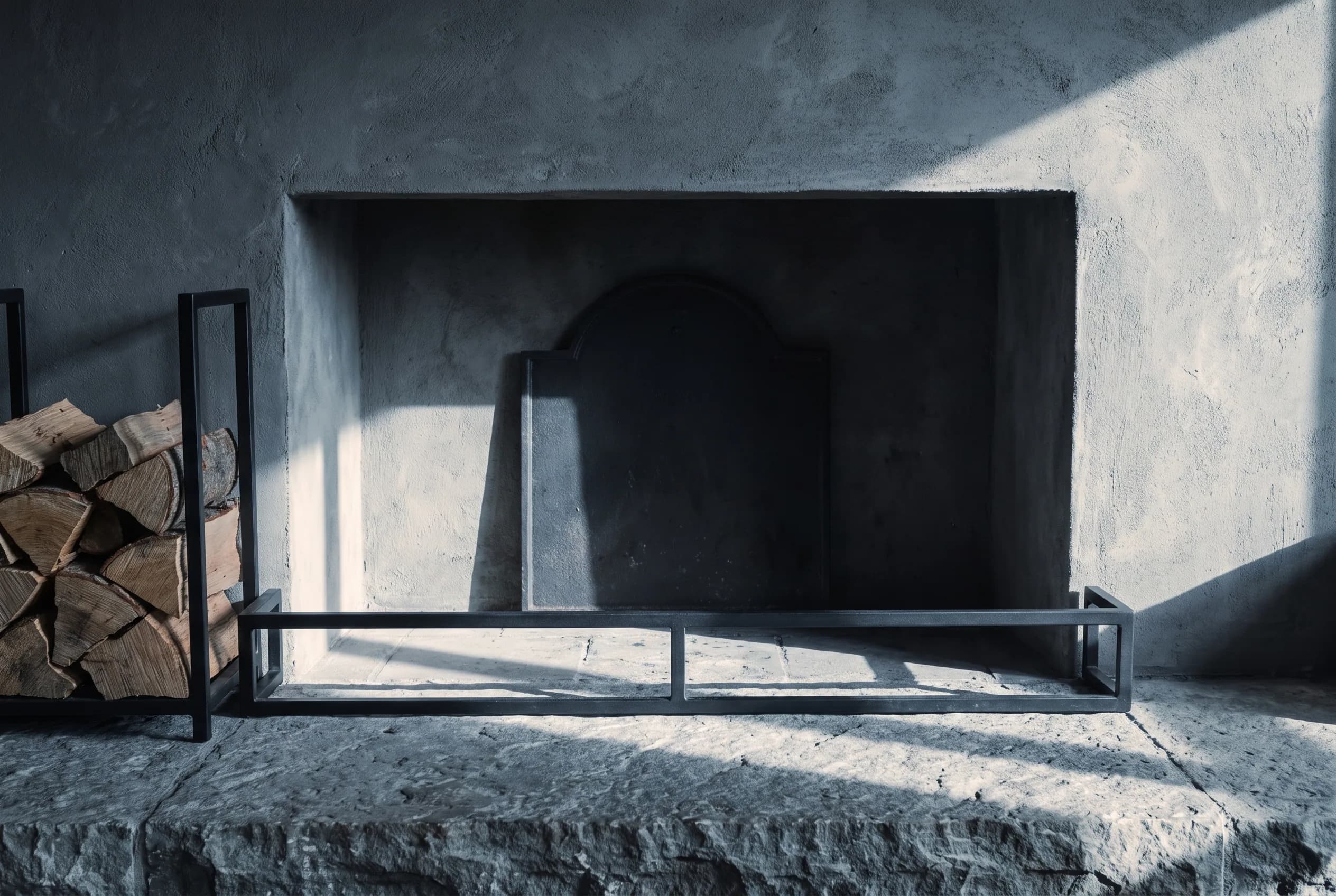
Summit Flint sells hearth and mountain-home goods — fire tools in blackened steel, cast iron, riven slate, undyed wool and sheepskin, unlacquered brass, waxed canvas. Every piece publishes three things: how long it should last in ordinary household use, the part that wears out first, and whether we keep that part on the shelf.
That is the organising idea of the whole shop, and it is a claim about the object. Not about you, not about your house, and not about how you will feel in the room. A poker either reaches the back of a firebox or it does not. A broom either wears at the leading edge or it wears somewhere else. Those are things you can hold us to, which is exactly why we would rather print them than an adjective.
A wear point is more useful than a slogan
The usual thing to tell a customer is that a piece is built to last, or backed for life, or guaranteed forever. Those sentences are all the same shape: they describe a feeling of permanence and commit the seller to nothing in particular. Nobody can look at a poker and tell whether it was built to last. Anybody can look at a hearth broom and see that the horsehair is going at the leading edge.
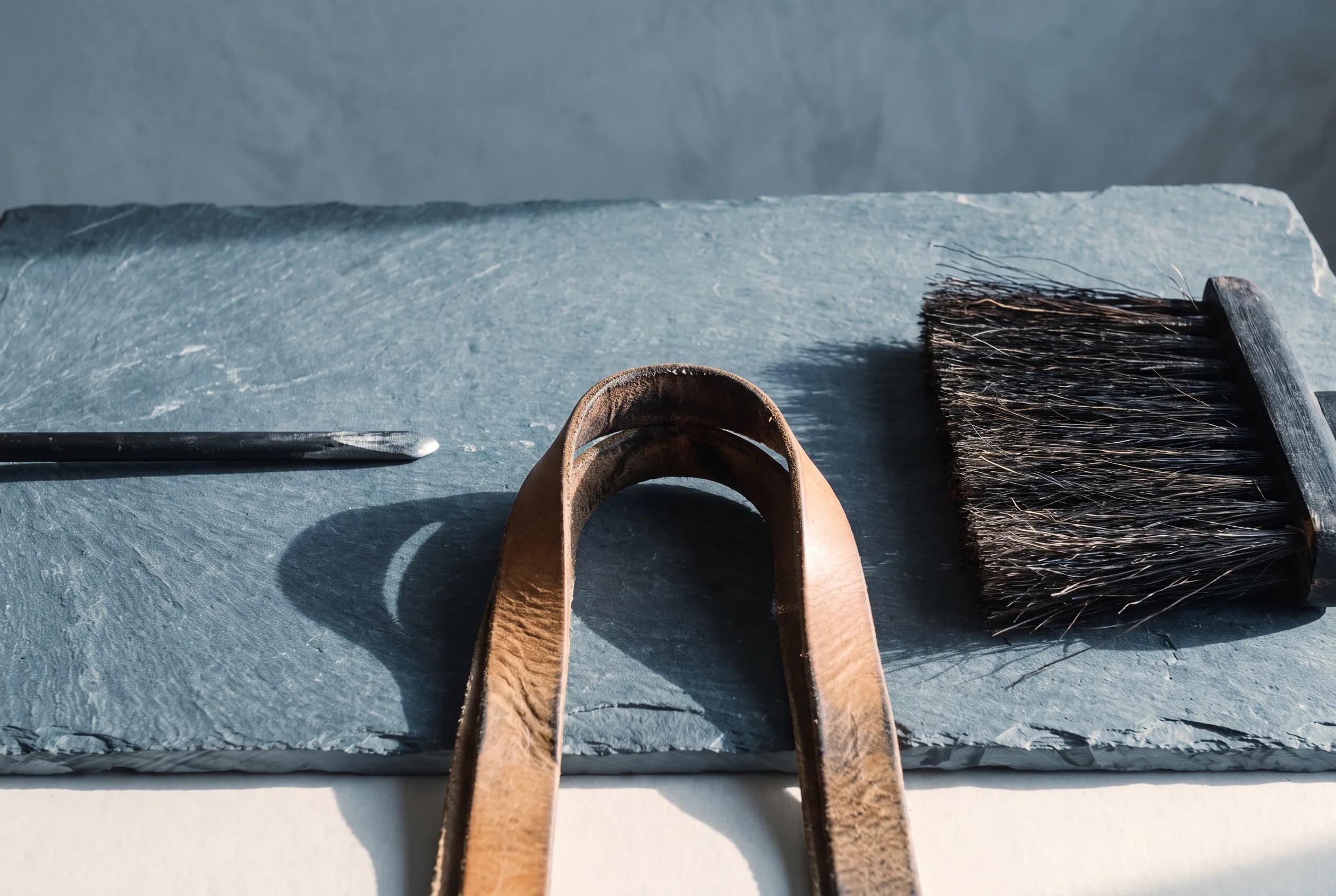
So we say the second thing. The tool set is a 30-year object whose broom head goes first, and broom heads are stocked. The lantern sits in the 25–40 year band, its flat wick goes first and its glass chimney second, and both are stocked. The cast fire back has nothing on it that can fail, so it publishes no stocked part at all — and it says that rather than inventing one.
A wear point is checkable, and that is the entire point of putting it on the page. If we tell you the sling is what goes on a log carrier and the seams go first instead, you have caught us being wrong about our own product, and you should tell us. A slogan cannot be wrong, which is another way of saying it was never information.
A published service life is our considered estimate of how long a piece lasts in a house. It is not a warranty. There is a separate 12-month warranty against manufacturing defect — a failed weld, a cracked casting, a seam that was wrong when it left us — and it is written out in the terms. Keeping those two apart matters, so we would rather say it here than let you discover it in a policy page after something goes wrong.
The four bands
Every piece falls into one of four bands, and the shop can be browsed by band as readily as by what a thing is. What decides the band is the material, and whether there is a genuine consumable in the piece at all.
- LifetimeLifetime
- Cast iron and forged steel. Nothing in this band has a consumable part. Kept dry and re-seasoned when it asks for it, these outlive the house they were bought for.
- 25–40 yr25–40 years
- Blackened steel and solid brass, no moving parts. The finish softens with heat and handling — that is the finish working, not failing.
- 10–25 yr10–25 years
- Wool, sheepskin and bridle leather. Natural fibres with a real wear point, all of them repairable, most of them better at year ten than year one.
- Re-partedServiceable
- Pieces with a genuine consumable — a horsehair head, a bellows hide, a lantern wick. The body lasts decades; the consumable is stocked, so you replace the part rather than the piece.
Pinned, tacked and welded — not glued
Handles are held on with a brass pin driven through the ferrule. Adhesive would be faster, cheaper, and for the first several years completely indistinguishable. The difference arrives on the day the handle splits: a pinned handle comes out with a hammer and a nail punch in about ten minutes, and a glued one turns a 30-year tool into scrap in the time it takes to notice.
The same reasoning runs through the rest of it. Log racks are welded from 1-inch square tube rather than bolted flat-pack, because a bolted rack at 36 inches wide racks sideways under a quarter cord within two winters. Carrier handles are riveted and stitched rather than bonded, so the stitching is what eventually goes — and stitching can be redone. Lantern burners unscrew. Broom heads unpin. Foot pads pull off and push on.
None of that makes a piece cheaper to build. It makes it possible to keep, which is the only kind of durability that survives contact with a real house.
The set rule
A set is rated by its shortest-lived part
The Hearth is a four-piece set. Its fender and its tools sit in the 25–40 year band and its trivet is a lifetime piece, so there is an obvious flattering number available and it is not the one on the page. The set publishes a service life of eight years, because eight years is when the broom head needs replacing, and the broom head is the first thing in that box to ask anything of you.
Quoting the longest-lived part of a set is how a number stops meaning anything. It is true and useless at the same time: the cast trivet was always going to outlive the room. The figure that helps is the one that tells you when you next have to do something, and for that set the honest answer is a broom head at roughly year eight — a stocked part, for a few dollars, precisely so the answer is a part and not a new set.
Three words we use literally
- UNDYED
- No colour was added. The greys and browns in the wool and the sheepskin are the fleece colours, which means one piece does not match the next one exactly: a full sheepskin varies by up to four inches in each direction and by a shade or two across the hide. That is what undyed costs you. What it buys is that nothing can fade unevenly, because there is nothing on it to fade.
- UNLACQUERED
- No clear coat over the brass. A lacquered lantern stays bright for a few years, and then the lacquer yellows, crazes and lifts in patches — and there is no fixing that short of stripping the whole piece. Unlacquered brass arrives bright, goes brown-gold across the first year, and polishes back to bright on any weekend you feel like it. The finish is reversible; the alternative is not.
- BLACK OXIDE
- A conversion coating, not paint. The black is a chemical change in the surface of the steel itself, so there is no film to chip and nothing that can flake off into the hearth. It also cannot be touched up, and it will not stay even: heat and handling take it from matte black towards mottled graphite, fastest at the poker tip and the jaws of the tongs.
These finishes are supposed to change
Read this before you order. It is the most common reason a piece like these comes back, and it is nearly always a surprise rather than a fault.
The steel will not stay evenly black. The poker tip goes graphite first, then the shovel pan, then everything a hand touches. The brass will not stay bright — it is brown-gold inside a year, faster where it gets held. The felt under a slate board scorches at the edge nearest the fire. Waxed canvas creases permanently in the first week, because the crease is where the wax has moved, and it does not come out. Wool pills a little before it settles. Cast iron blackens over the first few fires and then holds a dark surface rust, which is protective rather than a problem.
All of it is on the product page for the piece it applies to, in the making record, well before you reach a card field. A customer told that a poker stays factory-black and then watching the tip go grey has been mis-sold something, and files a claim about a product that is working correctly. A customer who was told it goes grey watches it go grey.
None of this narrows what you can send back. Anything can come back inside 60 days for any reason at all, including that the patina turned out wrong for that room. The distinction only decides what we do with it afterwards — see the returns policy.
The wear note
What you will not find here
No star ratings, no review counts, no quoted buyers. This shop is new and it does not have them yet. When there are real ones, from people who really bought something, we will publish those and say where they came from.
No origin story either, for much the same reason. You are being asked to trust a published number about an object, and the way to earn that is a complete making record on every product page — materials by name, dimensions, weight, finish, where it was made, how to care for it, and what it is not suitable for — rather than a paragraph about a workshop.
And nothing sold here is safety equipment. The fender is a low kerb that keeps a rolled log on the right side of a line; it is not a spark guard and it does not replace a fireplace screen. Wool is not a fire blanket and must never be used as one. No piece in this catalog is tested, rated or certified to any fire standard, and every product page says so in the block that lists what the piece is not for.
Reaching a person
Monday–Friday, 8:00am–4:00pm MT, by email and on the telephone. Every message answered within one business day. If you are weighing two pieces, or you are not sure a fire back fits your firebox, ask before you order. We would rather talk you out of something than take an order that comes back on a pallet.
All prices are shown and charged in US Dollars (USD). Your card statement will show SUMMIT.