Lifetime6 pieces
Lifetime
Stated figure of 40 years and above
Cast iron and forged steel. Nothing in this band has a consumable part. Kept dry and re-seasoned when it asks for it, these outlive the house they were bought for.
Everything in this bandThe service life mark
Every piece in this catalog publishes three facts. How long it should last in an ordinary household. The part that wears out first, named specifically rather than gestured at. And whether we keep that part on the shelf, so the answer at the wear point is a replacement part instead of a replacement purchase.
Those three are struck on the piece, printed on the card in the box, and shown on every product page. They are claims about the object — checkable against the object, and against this table.
Read this first
The figure on a stamp is our considered estimate of how long the object should go on doing its job in a normal house with a normal fire in it. It is not a term of cover, not a guarantee, and not a promise to replace the piece when the figure runs out. Nothing on this page entitles anyone to anything.
The warranty is a separate thing, written separately, with its own terms and its own limits — and it is much shorter than most of the figures below. It lives in Terms & Conditions. Your right to send something back is separate again and is set out in Returns & Refunds.
If a figure on this page ever appears to disagree with the written terms, the written terms are the ones that bind. We would rather say that plainly here than have anyone discover it later.
01
A stated span in years of ordinary household use, or Lifetime where nothing on the piece is consumable. It describes the object under normal domestic use — not hard use, not commercial use, and not neglect.
02
Named down to where on the piece it happens: the leading edge of a broom head, the binding nearest the fire, the pivot that loosens. Naming it is the test of whether the figure was thought about at all.
03
Yes means the replacement part exists and can be ordered on its own. No means there is nothing to sell you — either the piece has no consumable part, or the repair is a re-stitch or a re-peen rather than a swap.
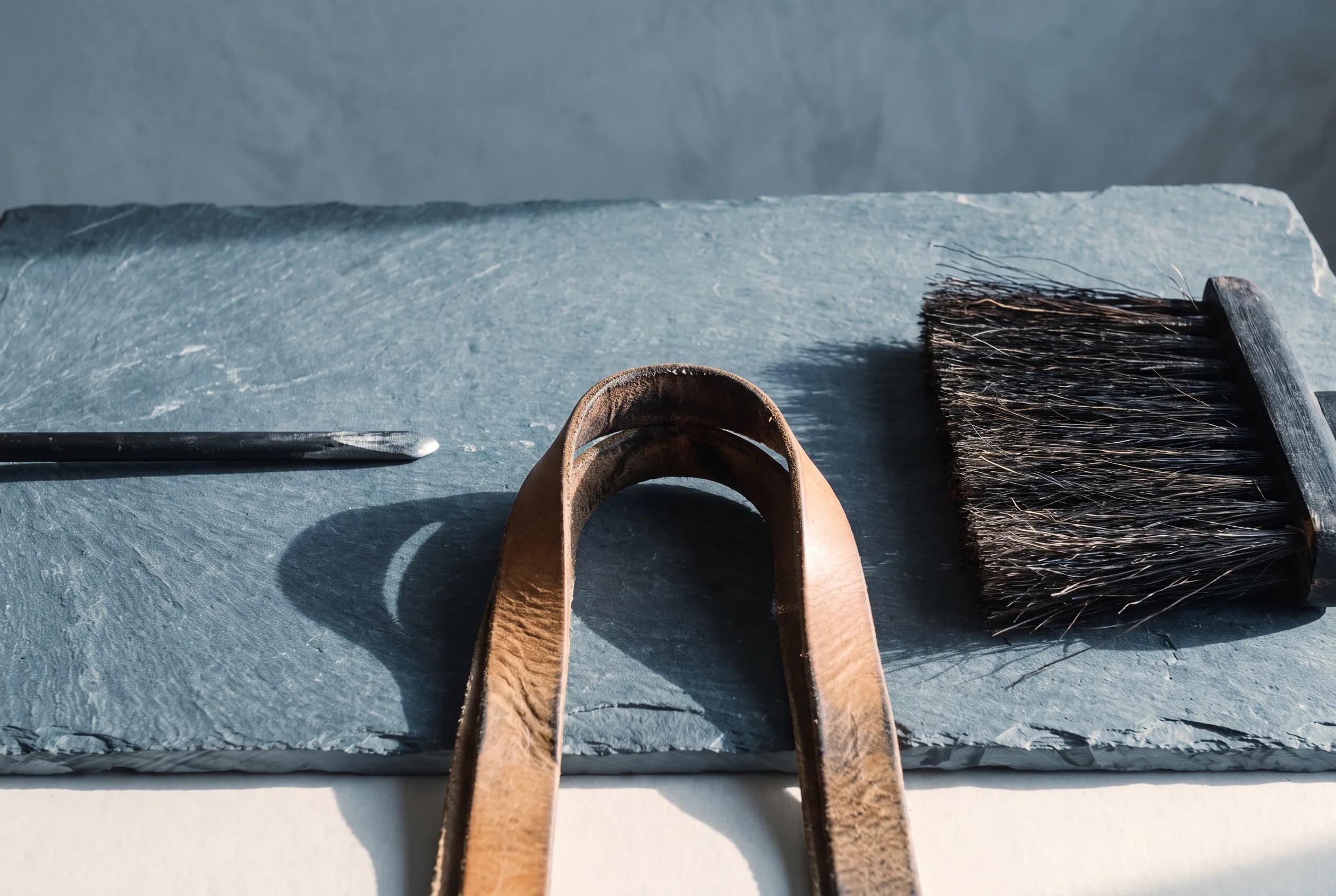
A band is a shelf the figure sits on, and it is set by the material more than by the piece. Each one is a route in the shop, so the catalog can be browsed by how long a thing lasts as well as by what it is.
Stated figure of 40 years and above
Cast iron and forged steel. Nothing in this band has a consumable part. Kept dry and re-seasoned when it asks for it, these outlive the house they were bought for.
Everything in this bandStated figure of 25 years and above
Blackened steel and solid brass, no moving parts. The finish softens with heat and handling — that is the finish working, not failing.
Everything in this bandStated figure of 10 years and above
Wool, sheepskin and bridle leather. Natural fibres with a real wear point, all of them repairable, most of them better at year ten than year one.
Everything in this bandA genuine consumable part
Pieces with a genuine consumable — a horsehair head, a bellows hide, a lantern wick. The body lasts decades; the consumable is stocked, so you replace the part rather than the piece.
Everything in this bandAll 27 pieces we sell, with the figure each one publishes, the part that goes first and whether we stock it. Nothing is left out of this table, which is the only reason it is worth reading — a list of only the good rows would be an advertisement.
| Piece | Stamp | Band | What wears first | Part stocked |
|---|---|---|---|---|
| Cast Fire BackCI-04 | Lifetime80 yr stated | Lifetime | Nothing. A fire back is one casting and its whole job is to be the thing that takes the heat. | No part |
| Cast TrivetCI-03 | Lifetime60 yr stated | Lifetime | Nothing. This is a single casting with no parts. | No part |
| Riven Slate BoardHS-01 | Lifetime60 yr stated | Lifetime | The felt on the underside, which compresses and can be re-felted. | Stocked |
| Hearth KettleCI-01 | Lifetime50 yr stated | Lifetime | Nothing that fails. The exterior enamel can chip if it is dropped on stone. | No part |
| Hearth PotCI-02 | Lifetime50 yr stated | Lifetime | Nothing that fails. The lid knob is the only fastened part. | Stocked |
| Brass Match SafeFM-01 | Lifetime40 yr stated | Lifetime | The striker strip on the base, which is a consumable and is replaceable. | Stocked |
| Hearth FenderHS-02 | 25–40 yr38 yr stated | 25–40 years | The felt pads under the feet, which flatten and can be replaced. | Stocked |
| Candle Holders, PairLT-02 | 25–40 yr38 yr stated | 25–40 years | Nothing that fails. The cup collects wax, which lifts out cold. | No part |
| Log RackCY-03 | 25–40 yr38 yr stated | 25–40 years | The felt foot pads. The frame itself has no wear point indoors. | Stocked |
| The Long PokerFT-02 | 25–40 yr35 yr stated | 25–40 years | Nothing that fails. The tip loses its finish first and keeps working indefinitely. | Stocked |
| Log TongsFT-05 | 25–40 yr35 yr stated | 25–40 years | The pivot, which loosens slightly over decades and can be peened tight again. | No part |
| Kindling BoxFM-03 | 25–40 yr35 yr stated | 25–40 years | Nothing that fails. The base gets scuffed where it is dragged. | No part |
| The Hearth Tool SetFT-01 | 25–40 yr30 yr stated | 25–40 years | The horsehair on the broom head, at the leading edge where it meets the hearth. | Stocked |
| Ash ShovelFT-03 | 25–40 yr30 yr stated | 25–40 years | The leading lip of the pan, which thins where it scrapes stone. | Stocked |
| Flint & Steel StrikerFM-02 | 25–40 yr30 yr stated | 25–40 years | The flint, which is consumed. The steel effectively is not. | Stocked |
| Brass Storm LanternLT-01 | 25–40 yr30 yr stated | 25–40 years | The wick, then the glass chimney. Both are consumables and both are stocked. | Stocked |
| Undyed Camp BlanketWL-01 | 10–25 yr20 yr stated | 10–25 years | The whipped edge at the corners, where it is gripped and dragged. | No part |
| Full SheepskinWL-03 | 10–25 yr20 yr stated | 10–25 years | The wool at the spine line, which flattens under repeated weight. | No part |
| Heavyweight Wool ThrowWL-02 | 10–25 yr18 yr stated | 10–25 years | The fringe, which thins and tangles at the ends. | No part |
| Wool Felt Hearth MatHS-03 | 10–25 yr15 yr stated | 10–25 years | The bound edge nearest the fire, which scorches and frays first. | No part |
| Log CarrierCY-01 | 10–25 yr15 yr stated | 10–25 years | The stitching where the leather handle meets the canvas — not the canvas and not the leather. | Stocked |
| Wool Floor CushionWL-04 | 10–25 yr14 yr stated | 10–25 years | The fill, which compacts. Expect it to lose about a third of its loft by year ten. | Stocked |
| Kindling ToteCY-02 | 10–25 yr14 yr stated | 10–25 years | The base corners, which abrade on stone. | No part |
| The First WinterST-02 | 10–25 yr14 yr stated | 10–25 years | The stitching at the log carrier handles, at roughly year fifteen. | Stocked |
| Ash & Leather BellowsFM-04 | Re-parted12 yr stated | 10–25 years | The leather gusset, at the fold nearest the hinge, where it flexes most. | Stocked |
| Hearth BroomFT-04 | Re-parted8 yr stated | Serviceable | The horsehair, at the leading edge. Expect visible wear at year six to eight of daily winter use. | Stocked |
| The HearthST-01 | Re-parted8 yr stated | Serviceable | The broom head in the tool set — the shortest-lived part of the shortest-lived piece, at roughly year eight. | Stocked |
The stamp and the band are two different things and on a few rows they read differently. The stamp is the range the object is built to; the band is the shelf its stated figure clears, and a fender stamped 25–40 sits at the top of that range, so it clears the lifetime shelf. The middle column is the figure the sort is done on, and it is the number every other claim on this page is anchored to.
Stocked means the replacement part can be ordered on its own. No partis not a warning: on most of these rows it means the piece is a single casting or a welded body with nothing on it to consume. Where it does have a wear point — the felt mat’s binding, the tongs’ pivot — the repair is a re-stitch or two taps of a hammer rather than a part swap, and the product page says so.
The rule for sets
| The HearthST-01 | Re-parted8 years | The broom head in the tool set — the shortest-lived part of the shortest-lived piece, at roughly year eight. |
|---|
The Hearth is four pieces of blackened steel, cast iron and waxed canvas. The fender and the tools are 25 to 40 year objects. The trivet is a single casting and will outlive the house. On the arithmetic most stores use, that set is a lifetime purchase.
It publishes eight, because eight is when the horsehair on the broom head has worn down at the leading edge and wants replacing. The broom head is the shortest-lived part of the shortest-lived piece in the box, and it is the first thing in that set anyone will have to do something about.
Quoting the longest number would not be false, exactly. It would just make the figure useless — once a set can advertise its best component, every set is a lifetime set and the mark stops carrying information. So the rule is fixed: a set states the figure of its weakest link, and every consumable in it is stocked separately.
A glued handle is faster to make, cheaper to make, and completely permanent. That last part is the problem. Adhesive turns two serviceable pieces into one unserviceable one, and the day an ash handle splits — which is the day it was always going to split — a glued tool becomes scrap.
A pinned handle comes apart with a hammer and a nail punch in about ten minutes. The brass pin drives out, the split handle comes off the tang, a stocked handle goes on, a new pin goes through. The tool is back on the rack the same evening.
The same reasoning picks every other join in the catalog. The tongs pivot on a peened rivet rather than a bolt, because a bolt works itself loose every season and a peened rivet is tightened with two taps. The kindling box is welded rather than folded and riveted, because rivets are what start rattling on a box dragged across stone twice a day. Carrier slings are tacked and stitched so a cobbler can re-stitch them.
None of this is craft for its own sake. It is the difference between a figure we can publish and a figure we would have to hope about.
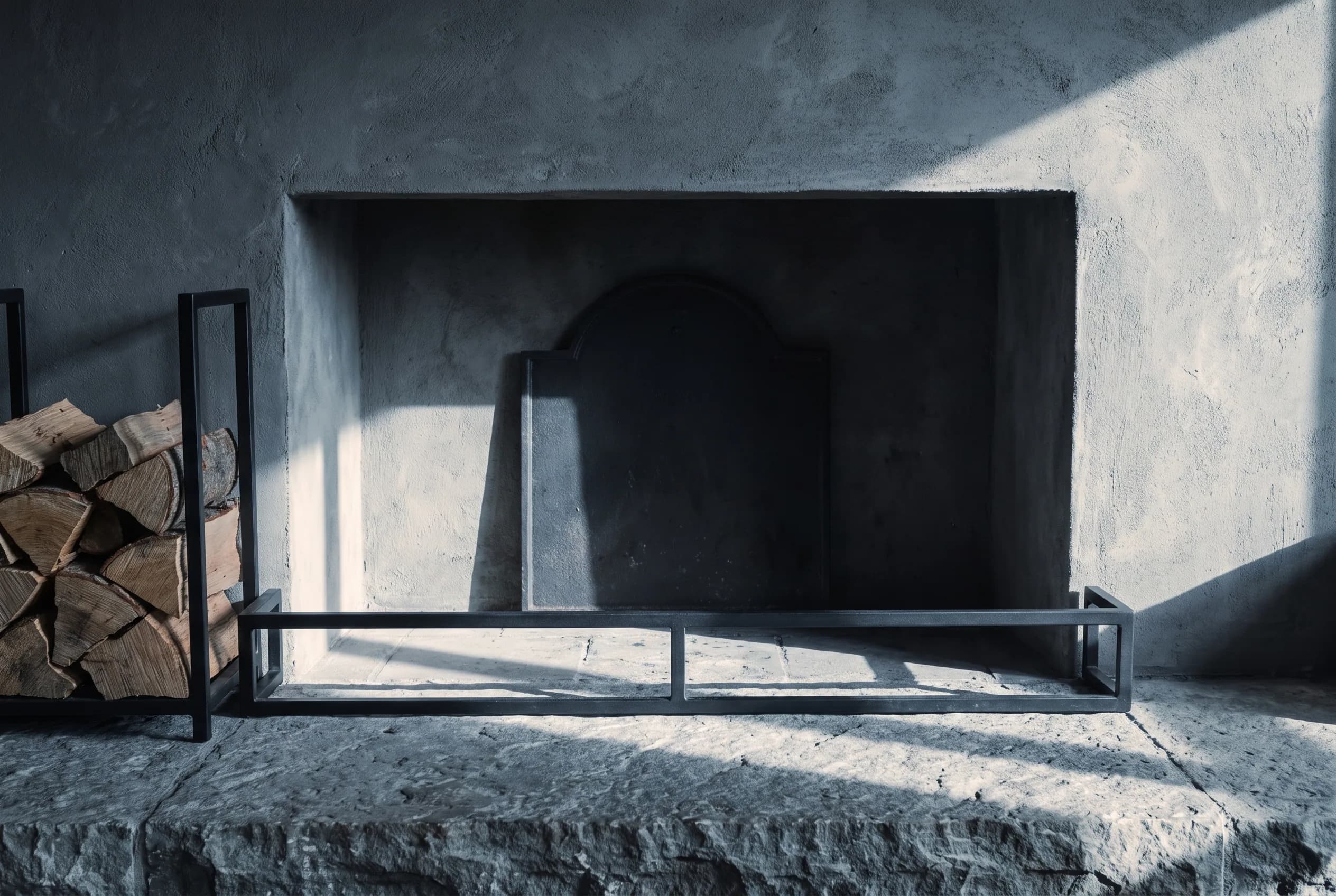
The figure describes ordinary household use. These are the things that end a piece early, and none of them is a manufacturing fault:
A poker used to lift a burning log off the grate will take a set in the bar. The tongs exist for that. A bent poker is a bent poker, not a short service life.
Every lantern here is a live flame in a glass chimney. Left alone it will soot the glass, cook the wick and can crack a chimney outright. Put it out when you leave the room.
Natural skins and undyed fleece want air. Rolled up wet, or dried hard against a radiator, a skin stiffens permanently and no amount of working it brings the hand back.
Black oxide is a conversion coating, not a weather coating, and waxed canvas is water-resistant rather than waterproof. Left out through a season, a log rack rusts from the feet up. These are indoor and porch objects.
The tools are cut for an open hearth and their handles are unshielded. The cast iron here is made for a hearth rather than a hob. Each product page states its own limits, and those are the ones that count for that piece.
Email or call, tell us the stamp mark on the piece — the two letters and the number, ST-01 on the card in the box — and we will tell you what the part is and what it costs. Broom heads, ash handles, wicks, chimneys, slings and foot pads are the ones people ask for. If the answer is that there is no part because there is nothing on it to replace, we will say that too.
Monday–Friday, 8:00am–4:00pm MT · Every message answered within one business day.